

How Long Should I Really Follow the Keto Diet For?
The ketogenic diet has come a long way from its humble beginnings.
Unless you’ve been living under a rock, you’ve probably heard of the ketogenic diet. You might have even tried it. This low-carbohydrate diet is high in fat and protein, which sounds scary, but it’s been shown to be effective as long as it’s followed correctly.
Initially developed in 1921 by Russel Wilder to treat epilepsy, this diet is now experiencing a resurgence. Celebrities like Gwyneth Paltrow, Lebron James, and Kim Kardashian have all gushed about the keto diet.
Like any plan that seriously reduces or completely cuts carbs, it’s not the easiest diet to stick to for a long period of time.
(Many people saw weight loss results in just their first week from following this “28-day Keto Challenge.”) Fortunately, you may not have to commit forever to reap the results.
We talked to experts to find out exactly how long you should follow the keto diet.
Remind me, what is the keto diet?
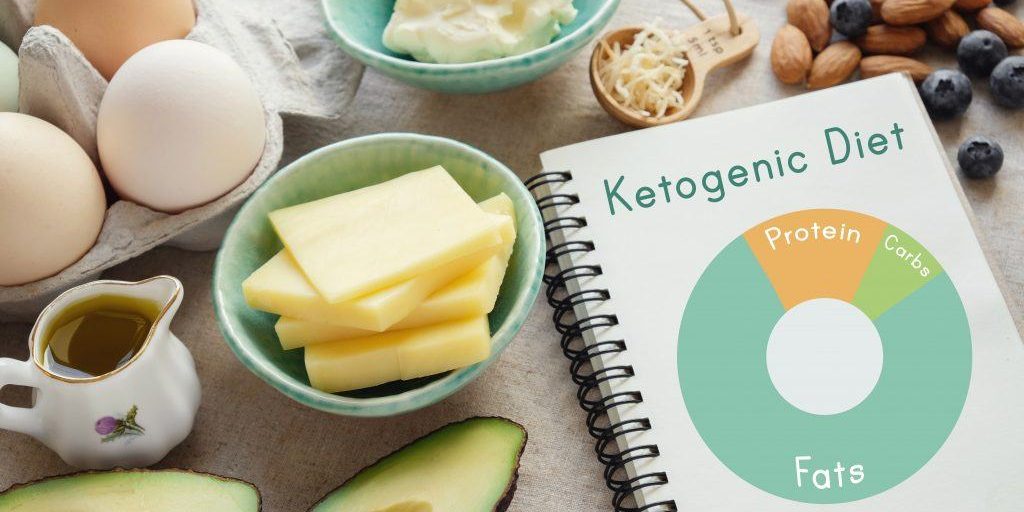
On the keto plan, your diet is composed of 70 percent fat, 25 percent protein, and 5 percent carbohydrates, says Samantha Lynch, R.D.N.
The goal of following a mostly fats diet is to put your body into ketosis. Studies show that it’s easy to get this wrong if you’re not following a proper plan. (Many have had success on this Keto plan here.)
When the body uses carbs as its primary source of fuel, it turns those carbs into a form of energy called glycogen. Ketosis slowly switches the body’s source of fuel from glycogen to ketones, thereby using fats as the body’s primary source of energy.
“When your body is relying on fat, there are a lot of ketone bodies—that’s the basic fuel source in the bloodstream—and the brain uses those very efficiently,” says Paul Salter, R.D., M.S., founder of Fit in Your Dress. As a result of this shift, the body enters a stage called ketosis. It now burns fat for fuel instead of carbs. The weight melts off quickly, and the results are often dramatic.
Want some fun workouts to go along with your new diet? Try Aaptiv. The app features hundreds of exercise programs designed for all interests and skill levels.
How long does it take the body to get into ketosis?
Ketosis isn’t exactly easy to achieve. According to Salter, following the diet’s guidelines is paramount. This is because your body could snap out of its ketotic state at any point.
With the ketogenic diet, you have to meet these precise guidelines of eating—consuming this exorbitant amount of fat, a very small amount of carbohydrates—to actually see the benefits. If you do not eat to the guidelines, you actually don’t induce the state of ketosis to experience those benefits,” he says.
In order to see your body shift to ketosis and start experiencing benefits, you have to allow an adjustment period of a few weeks.
“The first two to six weeks are virtually the ketogenic adaptation phase, where your body is going through the adaptation of switching to relying primarily on fat versus glucose or carbohydrates,” Salter says.
He adds that to really see results, you should follow the diet for a minimum of three months.
Mark Sisson of The Daily Apple says there are four indicators that you’ve gone into ketosis:
- Higher energy levels: Without carbohydrates, your body now has a “super fuel” that makes you feel more energetic.
- No more cravings for sweets: Carbs are addictive, and if you’re eating them daily, you’ll continue to crave them. Once you eliminate them from your diet, you’re likely to find that you no longer desire them the way you once did.
- “Keto breath”: You might notice a hint of metal on your breath, which is also described as a “sweet rotten apple” scent. It’s subtle and may not last long, but in the meantime, make sure you’re drinking plenty of water to flush out any odors.
- Testing: To find out if you’ve entered ketosis, you can use urine test strips, a breath test, or a blood analysis.
What are some things to keep in mind while following the keto diet?
In order to achieve true ketosis and avoid any nutritional deficiencies, consult a registered dietitian or nutritionist prior to starting the keto diet.
It’s easy to develop an electrolyte imbalance while on the plan, Lynch says, as you are not allowed to consume many foods from which you gain electrolytes, such as certain grains, fruits, and vegetables.
Additionally, it’s important to pay attention to the kind of fat you consume.
“Because of the high amount of fat necessary, [the keto diet is] much more welcoming to all types of saturated and unsaturated fat,” Salter says.
Try to balance out your fat intake to include healthier fats as well. Lynch adds, “I think that people feel more satiated on a higher-fat diet. But it has to be done right and include healthy fats. Some healthy sources are avocado, olives, nuts, and fatty fish.”
So, how long should I follow the keto diet?
As is true for any diet, you should only begin to follow it if you can maintain it as a lifestyle change. All it takes is 28 days to see a huge transformation.
“If you want to keep the weight off, you’re going to have to eat well. You can’t go back to your old ways,” Lynch says. “A diet has an endpoint, and that’s the problem. With a lifestyle, there’s no end point. You have to put the work in.”
Salter echoes that sentiment, adding that there is no finite limit “as long as someone knows how to properly navigate carb-infested situations like social gatherings, vacations, and holidays, or [they] are OK with the ramifications if they do rapidly introduce carbohydrates in a short period of time. Any diet needs to be something that can you do and maintain for far longer. [The keto diet] certainly is. You just have to be diligent and educate yourself.”
How can I reincorporate carbohydrates into my diet?
It’s no secret that many people wind up gaining back the weight they lost as soon as they reincorporate certain foods.
“The vast majority of people who lose weight regain the weight they did lose within a year. So clearly we do have a weight maintenance problem,” Salter says.
He gives the example of someone lowering their daily calorie intake from 2000 to 1200. That person, he says, will lose weight but will not be able to sustain such a low-calorie intake.
“As a result, they’re going to give in to their hunger and the foods they’re craving and binge wildly, bringing their baseline calories up significantly,” he explains.
“If they can diligently and gradually bring their calories up by slowly introducing portions while simultaneously expanding their food selection, they can still maintain their weight loss and their health benefits, especially if exercise remains the focal point in their weekly regimen.”
Take it slow.
To add carbohydrates back into your diet, Salter advises starting off small. For example, start with one portion a day of 15 to 25 grams of high-fiber carbohydrates.
“Eat it either before or after exercise. That’s when your body is going to most efficiently use that carbohydrate source. It’s going to use it as fuel for your workout or replenish what your body burned during the workout,” he says.
He recommends following that pattern for five to ten days. Then, add the second portion to the opposite end of your workout as well. This way, you will consume a small number of carbohydrates both before and after your workout.
“Slowly move forward with that. Add a little more to the pre-workout. Add a little more to the post-workout meal,” he says.
“Once you get to a point where you’re comfortable with those meals, you can branch out. Add a little bit more to another meal of the day. It’s a very slow process. If you don’t slowly transition out of the ketogenic diet gradually, you’ll see the scale skyrocket. You’ll feel bloated and puffy, and that’s because there’s an overwhelming sensation of all these carbohydrates being returned.”
Get started with Aaptiv today and take your diet to the next level with these workouts.
How Long Is It Safe to Be in Ketosis?
In full transparency, there are no long-term studies on the ketogenic diet. An article out of Harvard Medical School says the early results on cardiovascular health are promising, but more extended research studies are needed.
Some people get thrown off by the “Keto Flu.” Don’t be fooled by the name. The Keto Flu isn’t a form of the flu. Instead, it’s a list of symptoms that resemble the flu. These symptoms sometimes occur when the body first goes into ketosis, but, according to Medical News Today, it’s not something you should be overly concerned about. Symptoms typically last a few days to a few weeks. (Consult with your doctor if you have any concerns).
For now, doctors tend to agree that as long as your bloodwork is at appropriate levels and your weight is within a healthy range, there’s nothing wrong with doing the keto diet long-term. Reading between the lines, we can tell you that ketosis is generally considered safe, but it’s not suitable for everyone. We recommend checking with your doctor before starting the ketogenic diet.
The biggest challenge you might face with the keto diet is sticking to it. With keto, there’s no such thing as a “cheat meal.” If you fall off the wagon and eat a donut or a bowl of pasta, you’ll fall out of ketosis – that fat-burning stage – and the process must begin again.
Just as important as your diet is your exercise program. To get the best results on the ketogenic diet, be sure to combine your eating plan with a fitness regime. Aaptiv features hundreds of workouts led by high-energy trainers. Sign up today for a free trial.
IS THE KETOGENIC DIET MEANT TO BE A LONG-TERM PLAN?
It seems like everyone is talking about the low-carb, high-fat ketogenic diet. It’s the eating style of choice for celebs like Vanessa Hudgens and superstar trainers like Kirsty Godso, and has been touted as the go-to food plan for treating diabetes, anxiety, and to lose weight. But a big question that keeps popping up is, how long are you supposed to keep it up, exactly? It is meant to be a lifelong plan or a short-term fix?
Expert opinions are divided on the topic. Case in point are the two I asked for this article. Everyday Ketogenic Kitchen author Carolyn Ketchum has been eating low-carb for seven years (and all-out keto for almost four). She offers recipes and tips from her popular website, All Day I Dream About Food—she says sticking to it long-term is crucial for managing her diabetes. But registered dietician and Read It Before You Eat It author Bonnie Taub-Dix, RD, CDN, not only cautions against doing keto long-term, she doesn’t think it’s all that great to do for a short while, either.
The case against following the keto diet indefinitely
“This is just another fad diet,” Taub-Dix says of keto. While she does say it can be an effective way to lose weight relatively quickly, it’s not something she advises, let alone recommends, for a lifelong eating plan. “Carbs are not bad for you,” she says of the food group demonized by devout keto followers. “They’ve really gotten a bad rap over the years, but it’s more about choosing the right carbs.”
Taub-Dix says whole grains, for example, are a great source of vitamin B and fiber, a nutrient that’s even more important than you might realize. She points out that there’s a difference between cutting out croissants and muffins and cutting out all carbs. Another reason why she’s pro-carbs: They make you happy. “Studies have shown that they boost serotonin levels,” she says. “I know people who have started doing keto and have become really moody because they’re missing out on that.
“I know people who have started doing keto and have become really moody.” —Bonnie Taub-Dix, RD
While the ketogenic diet has become popular for people with diabetes, Taub-Dix warns against it, saying it can lead to some serious health problems. “It can cause DKA, diabetic ketoacidosis,” she says. “This happens when your body is producing a lot of ketones and can lead to vomiting, diarrhea, feeling faint, and being [excessively] thirsty.” Yeah, not fun. “Why take a risk of that happening?” Taub-Dix asks.
Okay, so she’s not into keto. What does she advocate instead? Good old-fashioned moderation. “It’s boring and common sense, but eating a wide variety of foods and using portion control is really what works in the end,” she says.
And for sticking with keto for life
Even though Ketchum has written a book on keto, keeps on top of the scientific research about it, and has been living the keto life for years, she stresses that she is not a medical expert. “I read a lot of studies, but I’m not the person doing the research,” she says. Still, she has pretty compelling reasons for why the ketogenic diet works long-term.
“In my case, [since I have diabetes], I have a visual representation of why it works, which is my blood glucose meter,” she says. “I know that if I didn’t stick to the ketogenic diet, I would likely have developed Type 2 diabetes and be on insulin.”
“If I didn’t stick to the ketogenic diet, I would likely have developed Type 2 diabetes and be on insulin.” —Everyday Ketogenic Kitchen author Carolyn Ketchum
But even if you don’t have diabetes, Ketchum says it works in the long-term. “People use it for weight control, anxiety, and other neurological disorders, and also for sustained energy and to combat brain fog,” she says. “Carbs can make you feel fuzzy because they spike your blood sugar, then it drops and you feel tired, which makes it harder to focus.”
And even though the word “diet” has a temporary connotation, she says it’s absolutely sustainable—as long as you like the food. “The key is having recipes for dishes you love on hand,” she says. “Food is pleasure, celebration, and fun. So as long as there are some keto-friendly foods around when you’re socializing, you won’t fall off the wagon.”
Even though Ketchum is an all-out keto advocate and, for her, there’s no turning back, she does offer up one caveat: “Because the diet is newly popular, there haven’t been any substantial long-term studies done,” she says. “I would love for someone to do one, following people on keto for 20 years!” But as for herself, she hasn’t seen any negatives to the diet, only positives.
While the wait for more research is on, for now, the best barometer is likely yourself. As with any eating plan, it comes down to how what you’re eating makes you feel. When finding the best diet for you—and whether that includes a plate full of eggs, avocado, and a side of bone broth (or not)—you are your greatest advocate.
3 WAYS TO UPGRADE YOUR HOMEMADE LUNCHES IF YOU MISS EATING OUT
It’s a longstanding mystery and an absolute truth: Food prepared by someone who is not you tastes better. Since there’s a good chance your homemade plate of greens isn’t measuring up to the made-to-order salad you’d rather be lunching on, we took a stab at solving that mystery for you—and finding a way around it.
Sure, your kitchen might not resemble that of a Michelin-star restaurant, but recreating the fast-casual vibes of your favorite lunch spot doesn’t require any fancy gadgets or professional culinary skills. To get you started, we asked chef Carla Contreras to share some tricks she’s used to level-up her at-home lunches.
“This is when it’s important to be patient with yourself. Food doesn’t have to be complicated.”
“It can be incredibly stressful for people to cook and eat every single meal at home, especially if they’re not used to it,” says Contreras, who also founded the online cooking school Cook+Chop. “This is when it’s important to be patient with yourself. Food doesn’t have to be complicated.”
One of her go-to ways to simplify a week of cooking? “I roast a few veggies, make a pot of grains and a few proteins (like hard-boiled eggs, roasted chicken, or beans), and wash some leafy greens,” Contreras says.
To put an extra nutritious twist on her basic formula, keep Manitoba Harvest Hemp Hearts on hand for a delicious dose of protein (or what Contreras calls “plant-based protein powerhouses”), and continue reading for more chef-approved ways of making your at-home lunches worthy of a pro chef kiss.
Keep reading for chef-approved ways to level up your at-home lunches.
1. Add nutritious ingredients with interesting flavors
One of the mysterious reasons restaurant food tastes so good? Chefs study flavor combining. But luckily, you don’t need to become a trained chef by lunchtime. Simply being mindful of salt, acid, and umami can elevate your at-home lunches, Contreras says.
She turns to pink Himalayan salt as her primary salt source, uses vinegars or citrus to add a pop of acid, and adds umami-rich ingredients like soy sauce, Parmesan cheese, and nutritional yeast for depth. “Umami roughly translates into “deliciousness” in Japanese,” Contreras says, and who doesn’t want more deliciousness on their plate?
“Umami roughly translates into “deliciousness” in Japanese,” Contreras says, and who doesn’t want more deliciousness on their plate?
Manitoba Harvest Hemp Hearts fall into the umami category, and are a nourishing topping for almost any meal. “They have 10 grams of protein and 12 grams of omega-3s and -6s per 30-gram serving,” Contreras says. “They contain twice the amount of protein compared to flax or chia seeds, and they are also lower in carbohydrates for those following a keto lifestyle.”
For breakfast, Contreras adds hemp hearts to her smoothie or oatmeal, and they’re even more versatile at lunchtime. “I love adding hemp hearts to my grain bowls, salads, and on top of roasted veggies to give them a pop of texture, a slightly nutty flavor, and extra plant-based protein,” she says. The chef has spoken.
2. Use tech to connect
Do you find yourself working or scrolling through your phone during lunch, and not even paying attention to the meal you just ate? (Same.) As much as it might pain you to do it, try to put down your devices and be in the moment with your food. “We talk about putting technology outside of the bedroom because it disturbs our sleep, but what about our technology in the kitchen?” Contreras says.
Or, rather than relying on your friends’ feeds to get you through at-home lunches, schedule group Zoom calls so you can eat and chat with your work wives without missing a beat. This way you’re interacting face-to-face (ish), and decreasing your I’m-just-bored screen time—all while filling up on nutritious bites.
3. Take time to plate your food + set the table
When’s the last time you actually set out a placemat, arranged your fork and knife neatly next to your plate, and used a cloth napkin over a paper towel? If it’s been a minute, test out how taking the time to set the table (yes, even if it’s a table for one) can make your lunch break a more rejuvenating part of your day.
“Use your plates, napkins, utensils, placemats, tablecloths, and candles (even the ‘good’ olive oil),” Contreras says. “You’re 100 percent worth washing a few dishes, and it beats eating out of a to-go container standing over your countertop every single time.” (Are there cameras in our kitchen or…?)
While you’re probably never going to confuse your kitchen for your fave restaurant, these small changes can make lunchtime a highlight of your day. Oh, and once we’re back to buying salads, who says we can’t keep sprinkling hemp hearts on top, stepping away from our screens, and using a real plate?
A BEGINNER’S GUIDE TO COOKING PLANT-BASED MEAT
Plant-based meat products used to be the black sheep of the frozen food aisle; vegan burger patties were virtually synonymous with hockey pucks. Well, we’re certainly living on the other side of the spectrum now, aren’t we!
The rise of all the vegan meat alternative products out there has actually led to another hurdle: knowing which ones to buy and how to cook them and what to use them for. If you’re new to plant-based eating, the options can be overwhelming, but registered dietitian Carissa Galloway, RDN, is here to help on both fronts.
“When you’re shopping for meat alternative products, whether it’s chicken, pork, or beef, the first question to ask yourself is if you’re looking for an alternative that’s as healthy as possible or as close to tasting like meat as possible,” Galloway says.
If it’s nutrition you’re after, she urges everyone to scan the ingredients list and see if the product is made with healthy whole foods (like soy, lentils, and veggies). Then, she says to eye the protein content —this is important since you’d using it in place of meat, which is the primary protein source in many meals—and check that it’s low in sodium and saturated fat. “Meat substitute products higher in saturated fat will taste more like real meat, but aren’t as healthy because too much saturated fat is not good for cardiovascular health,” she says. So it’s all about weighing the pros and cons.
COOKING PLANT-BASED CHICKEN
“If you’re new to using meat substitution products, I recommend starting with easy recipes that you are used to using actual chicken for,” Galloway says. In general, you should use flavors that you already love, she says. “Experimenting with plant-based chicken is new enough; you don’t have to go all-out and try something completely out of your comfort zone the first time you try it.”
Her one big piece of advice? “You’ll find a lot of vegan fried chicken recipes, but my advice is to bake it,” Galloway suggests. This will cut down on the amount of saturated fat in the final dish, as fried food (even plant-based fried food) is notorious for lots of saturated fat. Brands like Gardein, Deliciou, and ToFurky sell faux chicken that isn’t breaded, making it best for a baked chicken swap.
Try it: Galloway likes to throw vegan chicken on the skillet with some frozen veggies and cooked rice to make a quick, completely plant-based stir-fry. Add soy or teriyaki sauce and you have an easy dinner in minutes.
PLANT-BASED BEEF
The OG of alt-meats, there are tons of plant-based beef options available—which makes for a variety of cooking methods. But generally, use them like you would their OG counterpart.
If you buy ground plant-based beef, such as Beyond Beef, you can cook and incorporate it into anything you would typically use beef for, such as chili, spaghetti sauce, stuffed peppers, or burrito bowls. Other products, like by Morning Star Farms, Gardein, and Hilary’s, come in the form of patties or meatballs and only require heating in the oven or on the stove before being ready to eat. Galloway says that a general rule of thumb when cooking with these items is to add veggies to whatever you’re making with it, whether it’s in the form of canned or frozen veggies, zucchini noodles, or leafy greens. That way, you can make sure you’re meal has enough fiber.
Try it: Galloway suggests cooking your plant-based beef with mushrooms, which have a similar texture to beef itself, in order to better mimc the beef experience (and add in some extra nutrients while you’re at it). So throw in some sautéd mushrooms in with your alt-beef chili or ragu—you’ll thank us later.
PLANT-BASED PORK
Aside from Impossible Foods’s forthcoming alt-pork product (which was announced earlier in the year), plant-based pork substitutes can be hard to find. Jackfruit is one of Galloway’s go-tos, and you can buy it already shredded and seasoned in the refrigerated food aisle. (In fact, The Jackfruit Company has whole meal kits incorporating jackfruit in place of pulled pork.) “It has the same texture and you can cook it the same way,” Galloway says. Unlike pork, she says, jackfruit is low in protein, so make sure to incorporate the nutrient elsewhere into your meal.
“In terms of substitutions for bacon or hot dogs, there are many products in the frozen food section made to mimic them in taste that you can cook the same way,” Galloway says, offering a reminder to check the sodium content when shopping for these products.
Try it: Galloway says she likes to use vegan hot dogs to make chorizo, cooking them with paprika, garlic, onion powder, and chili powder before serving for a more authentic taste. “I like to make a chorizo-style vegan hot dog and pair it with avocado,” she says.
The bottom line: Plant-based meat products have come a long way and most of the time, you can use them as an easy swap-in for whatever you were going to use meat for. But if you’re skeptical, Galloway says to start slow. “You don’t have to completely overhaul your whole diet at once,” she says. “Incorporate the products into recipes with ingredients you already know and love, see what works and what you like, and go from there.”
THIS 2-INGREDIENT VEGAN BLUEBERRY ICE CREAM RECIPE SATISFIES YOUR SWEETEST SWEET TOOTH
The second the weather starts getting warm, it’s not uncommon to find yourself staring at the ice cream section of the grocery store. I mean, sunny days and melty sweet scoops go hand in hand. While there are plenty of different healthy store-bought options to choose from, there’s a simply delicious vegan blueberry ice cream recipe that only calls for two ingredients.
A healthy remake of blueberry ice cream recently took off on TikTok because of how easy it is to make at home. All you need is frozen blueberries (the frozen part is important!) and your alt-milk of choice. Once combined, it turns into ice cream in minutes without even blending it together.
Marzia Prince, a plant-based health coach and the co-founder of Plant Chics, shared her version of the recipe on Instagram that requires 1/2 cup to 1 cup frozen blueberries and oat milk. “Coconut or almond milk has an after taste, but oat milk has a very neutral taste,” she says, making it a great choice for something like ice cream. Pour just enough milk so the frozen blueberries are mostly coated, like you’re making cereal. Then, stir it a little and let it sit for two to three minutes. “The frozen berries harden the milk. People always think I put it in the freezer, but I don’t.”
The frozen blueberries basically do all the work for you, allowing you to whip up a mess-free dessert in a matter of minutes. Here’s exactly how to make it for yourself at home.
OLYMPIC CYCLIST DOTSIE BAUSCH SHARES THE DELICIOUS, PLANT-BASED MEALS SHE EATS *ALL* THE TIME
Eating plant-based may be mainstream now, but former Olympic cyclist Dotsie Bausch has been following this specific diet since 2010, at age 36. (She’s 47 now.) “I started to get an understanding of what really goes on behind closed doors [in the meat industry] and I was just struck with intense frustration and anger,” she says. To her, it was a big wake-up call. “I grew up in Kentucky and there was probably never a time when there wasn’t an animal on my plate,” she says. “But I knew I had to make this change.”
As one of the top cyclists in the country, her Olympic trainers were nervous about her switching her eating style. They openly wondered if her endurance and stamina would be the same. It was all put to the test during the 2012 Olympic games. Bausch ended up bringing home a silver medal, quieting any doubts that she couldn’t perform as well on a plant-based diet as on a meat-centric one.
While different people define plant-based eating in different ways, for Bausch, it means avoiding animal products completely. “I’m 100 percent vegan, but plant-based because 90 percent of my diet is coming from plants,” she says. To her, the plant-based lifestyle resonates because she points out that just because something is vegan doesn’t mean it’s healthy. The health component is just as important to her as the animal-rights component.
Quarantined at home with her husband, Bausch says she’s had even more time to cook the plant-based meals she loves. What has changed slightly are her workouts since going to the gym is a no-go right now. “Now, my husband and I work out together in our garage and yard,” she says. “I jump rope and sprint up and down an alley behind my house for some cardio.” She also (no surprise) rides her bike since it’s one way to work out while maintaining social distancing. “I especially love to bike on trails because it’s so beautiful where I live in Orange County, California,” she says.