
A ketogenic diet for beginners
A keto or ketogenic diet is a low-carb, moderate protein, higher-fat diet that can help you burn fat more effectively. It has many benefits for weight loss, health, and performance, as shown in over 50 studies.That’s why it’s recommended by so many doctors.A keto diet can be especially useful for losing excess body fat without hunger and for improving type 2 diabetes.
Here, you’ll learn how to eat a keto diet based on real foods. Get started with our visual guides, recipes, meal plans, and simple 2-week Get Started program. It’s everything you need to succeed on keto.
1. What is a keto diet?
The keto diet is a very low-carb, higher-fat diet. It’s similar in many ways to other low-carb diets.
While you eat far fewer carbohydrates on a keto diet, you maintain moderate protein consumption and may increase your intake of fat. The reduction in carb intake puts your body in a metabolic state called ketosis, where fat, from your diet and from your body, is burned for energy.
What “keto” means
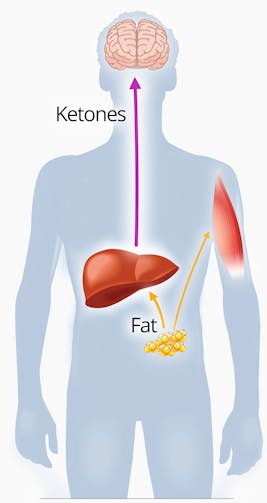
A “keto” or “ketogenic” diet is so named because it causes your body to produce small fuel molecules called “ketones.”
This is an alternative fuel source for your body that can be used when blood sugar (glucose) is in short supply.
When you eat very few carbs or very few calories, your liver produces ketones from fat. These ketones then serve as a fuel source throughout the body, especially for the brain.
The brain is a hungry organ that consumes lots of energy every day, and it can’t run on fat directly. It can only run on glucose – or ketones.
On a ketogenic diet, your entire body switches its fuel supply to run mostly on fat, burning fat 24-7. When insulin levels drop very low, fat burning can increase dramatically. It becomes easier to access your fat stores to burn them off.
This is great if you’re trying to lose weight, but there can also be other benefits, such as less hunger and a steady supply of energy — without the sugar peaks and valleys that often occur when eating high-carb meals. This may help keep you alert and focused.
When the body produces ketones, it enters a metabolic state called ketosis. The fastest way to get there is by fasting – not eating anything – but nobody can consistently fast forever.
A keto diet, on the other hand, also results in ketosis and can be eaten indefinitely. It has many of the benefits of fasting – including weight loss – without having to fast long term.
Who should NOT do a ketogenic diet?
There are controversies and myths about a keto diet, but for most people it appears to be very safe.
However, three groups often require special consideration:
- Do you take medication for diabetes, such as insulin?
- Do you take medication for high blood pressure?
- Do you breastfeed?
For more details about pros and cons in different situations, check out our full guide: Is a keto diet right for you?
Are you a doctor or do you need your doctor to help you with medications on a keto diet? Have a look at our low carb for doctors guide.
2. What to eat on a keto diet
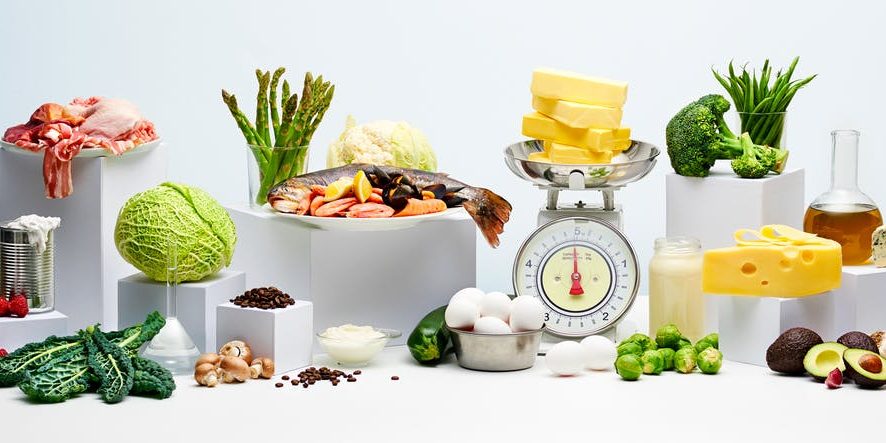
Here are typical foods to enjoy on a ketogenic diet. The numbers are net carbs per 100 grams (3.5 ounces) of food.
To remain in ketosis, lower is generally better:
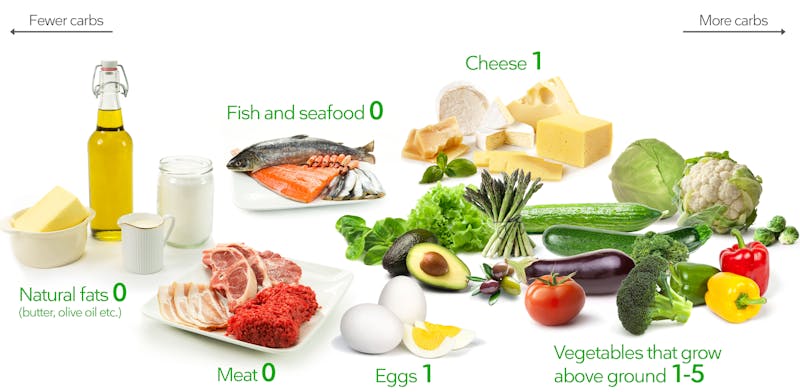
What’s the most important thing to do to reach ketosis? Avoid eating too many carbs. You’ll likely need to keep carb intake under 50 grams of net carbs per day, ideally below 20 grams.
The fewer the carbs, the more effective the diet appears to be for reaching ketosis, losing weight or improving type 2 diabetes.
Counting carbs can be helpful at first. But if you stick to our recommended foods and recipes you can stay keto even without counting.
Try to avoid
Here’s what you should avoid on a keto diet – foods containing a lot of carbs, both the sugary and the starchy kind. This includes starchy foods like bread, pasta, rice and potatoes. These foods are very high in carbs.
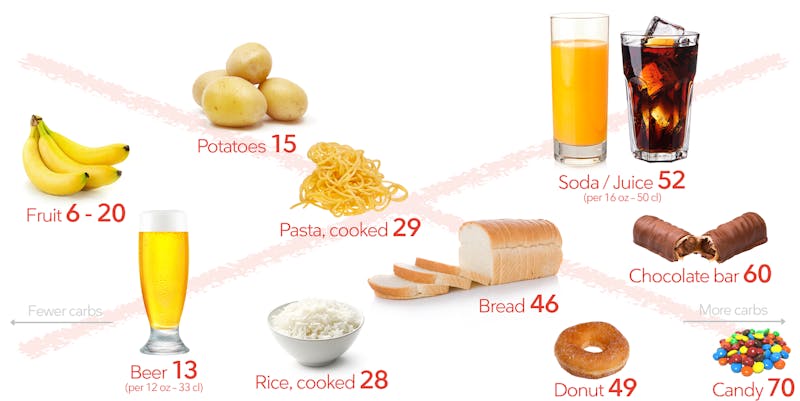
The numbers are grams of net carbs per 100 grams (3.5 ounces), unless otherwise noted.
Also avoid or limit highly processed foods and instead follow our whole foods keto diet advice.
You should also avoid low-fat diet products. A keto diet should be moderately high in protein and will probably be higher in fat, since fat provides the energy you’re no longer getting from carbohydrate. Low-fat products usually provide too many carbs and not enough protein and fat.
What to drink
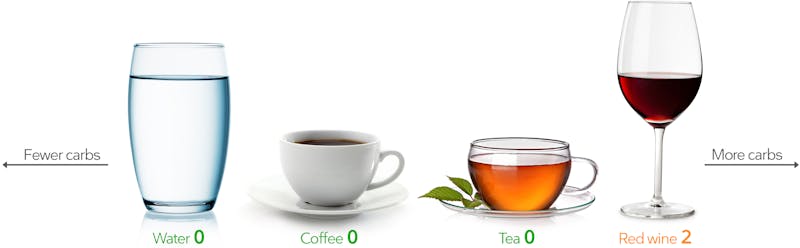
What can you drink on a ketogenic diet? Water is the perfect drink, and coffee or tea are fine too. Ideally, use no sweeteners, especially sugar.
A splash of milk or cream in your coffee or tea is OK, but beware that the carbs can add up if you drink multiple cups in a day (and definitely avoid caffe lattes!). The occasional glass of wine is fine too.
Keto diet meal plans
Here are two weeks of recipes for breakfast, lunch, and dinner on a ketogenic diet:
14-day keto diet plan
Get 60+ weekly keto meal plans, complete with recipes, shopping lists and more, with our premium meal planner tool (free trial). Our prepared meal plans include quick & easy, budget, family-friendly weeks, and more.
Our meal planner includes the ability to change meals to any of our hundreds of recipes, skip meals, or even construct your own keto meal plans from scratch using our recipes, and share them.
How low carb is a keto diet?
A keto diet is a very strict low-carb diet, containing less than 20 grams of net carbs per day.
Here are three examples of low-carb meals, based on how many carbs you aim to eat in a day. Note that only the left plate is reliably ketogenic:
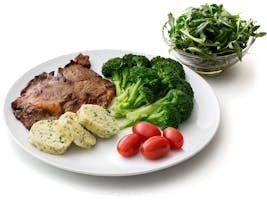
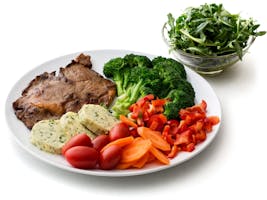
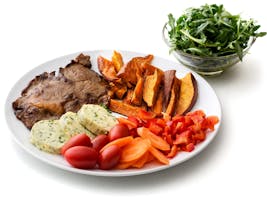
We recommend starting out by following the dietary advice as strictly as you can. When you’re happy with your weight and health, you could carefully try eating a few more carbs (if you want to).
Get started
Want help getting started? Sign up for our 2-week keto diet challenge to get eating plans, shopping lists, daily tips, and more.
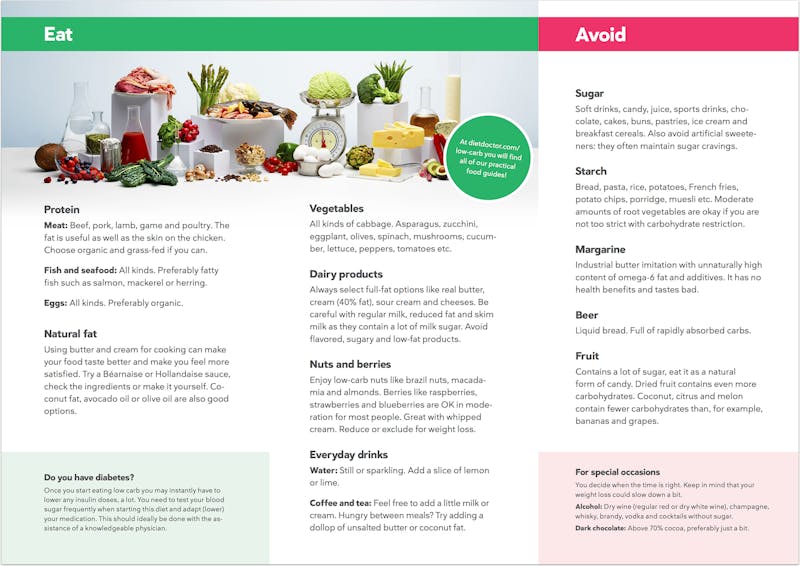
Leaflet
Here’s our leaflet with basic keto advice. Print it out, put it on your fridge, or give it to your curious friends:
3. Keto benefits: Why eat a keto diet
The benefits of a ketogenic diet are similar to those of other low-carb and higher-fat diets, but it appears to be more powerful than liberal low-carb diets.
Think of keto as a super-charged, low-carb diet, maximizing the benefits. However, it may also increase the risk of side effects a bit.
 Lose weight
Turning your body into a fat-burning machine can be beneficial for weight loss. Fat burning is significantly increased, while insulin – the fat-storing hormone – levels drop greatly.
This appears to make it far easier for body fat loss to occur, without hunger.
More than 30 high-quality scientific studies show that, compared to other diets, low-carb and keto diets result in more effective weight loss.
Appetite control
On a keto diet you’re likely to gain better control of your appetite. It’s a very common experience for feelings of hunger to decrease dramatically, and studies prove it.
This usually makes it easy to eat less and lose excess weight – just wait until you’re hungry before you eat.
It also makes intermittent fasting easier, something that can enhance efforts to reverse type 2 diabetes and speed up weight loss, beyond the effects of keto only.
Plus, you could save time and money by not having to snack all the time. Many people only feel the need to eat twice a day on a keto diet (often skipping breakfast), and some just eat once a day.
Not having to fight feelings of hunger could also potentially help with problems like sugar or food addiction.
At last, feeling satisfied can be part of the solution. Food can stop being an enemy and become your friend, or simply fuel — whatever you prefer.
Control blood sugar and reverse type 2 diabetes
Studies prove that a ketogenic diet is excellent for managing type 2 diabetes, sometimes even leading to complete reversal of the disease.
It makes perfect sense, since keto lowers blood-sugar levels, reduces the need for medications and reduces the potentially negative impact of high insulin levels.
Since a keto diet may reverse existing type 2 diabetes, it’s likely to be effective at preventing it, as well as reversing pre-diabetes.
Note that the term “reversal” in this context simply means that the disease gets better, improving glucose control and reducing the need for medications. In the best case, it can be so much improved that blood glucose returns to normal without medication, long term. In this context, reversal means the opposite of the disease progressing or getting worse.
However, lifestyle changes only work when you do them. If a person returns to the lifestyle he or she had when type 2 diabetes appeared and progressed, over time it is likely to return and progress once again.
4. How to get into ketosis on a keto diet
 Here are the seven most important things to increase your level of ketosis, ranked from most to least important:
-
- Restrict carbohydrates to 20 digestible grams per day or less – a strict low-carb or keto diet. Fiber does not have to be restricted, it might even be beneficial for ketosis.
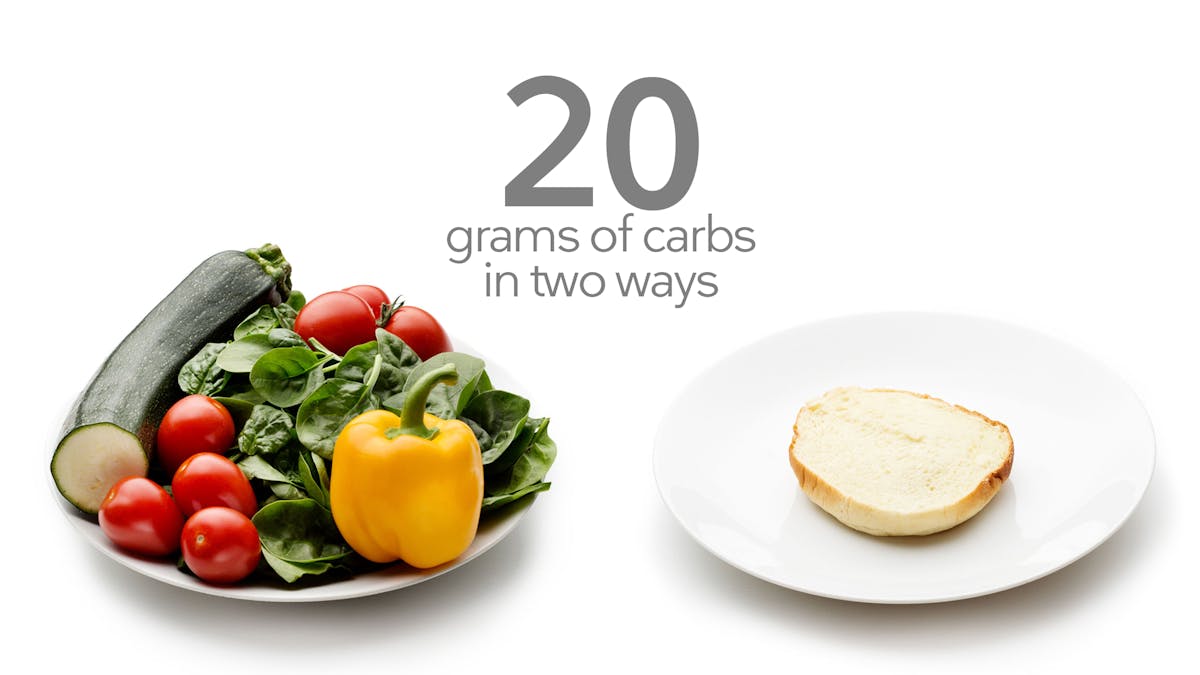
How much is 20 grams of carbs? Use our visual guide to find out. Or simply use our keto recipes and meal plans, which are designed to keep you under 20 grams. No calorie counting required.
Often, just restricting carbs to very low levels results in ketosis. So this may be all you need to do. But the rest of the list below will help make sure that you’re successful.
- Eat enough fat to feel satisfied. A keto low-carb diet is normally a higher-fat diet, because fat supplies the energy that you are no longer getting from carbs.
This is the big difference between a keto diet and starvation, which also results in ketosis. A keto diet is sustainable while starvation is not.
If you feel as if you’re starving, you’re likely to feel tired and want to give up your diet. But a ketogenic diet should help you avoid getting too hungry, making it sustainable and possibly making you feel great.So eat enough protein foods and low-carb veggies, with enough added fat to feel satisfied. If you’re hungry all the time, check that you are getting adequate amounts of protein at most meals and, if so, add more fat to your meals (like more butter, more olive oil, or some delicious sauces).
Our keto recipes have plenty of fat included, but you can adjust up or down, according to your own needs.
- Maintain a moderate protein intake. A keto diet is not meant to be a very-high-protein diet. We recommend 1.2 to 1.7 grams of protein per kg of reference body weight per day.
This means about 100 grams of protein per day if your lean body mass weight is around 70 kilos (155 pounds). Check out our target protein ranges to find out how much protein you should be aiming for each day.
Despite concerns that people on keto diets eat “too much” protein, this does not seem to be the case for most people. Because it is very filling, most people find it difficult to overeat protein.
Although amino acids from protein foods can be converted to glucose, under experimental conditions, only a small percentage actually are.This may be related to individual factors, such as degree of insulin resistance.However, even people with type 2 diabetes usually do well with the adequate levels of protein Diet Doctor recommends, if their diets are also low carb.At the same time, inadequate protein intake over extended periods of time is a serious concern. It can result in loss of muscle and bone, especially as you age.This is why our keto recipes are designed with the right amount of protein. See our protein guide.
- Avoid snacking when not hungry. Eating more often than you need, just eating for fun, or eating because there’s food around, reduces ketosis and slows down weight loss.Though using keto snacks may minimize the damage when you’re hungry between meals, try to adjust your meals so that snacks become unnecessary.
- If necessary, add intermittent fasting. For example, skip breakfast and only eat during 8 hours of the day, fasting for 16 hours (i.e. 16:8 fasting). This is effective at boosting ketone levels, as well as accelerating weight loss and improving insulin resistance.It’s also usually easy to do on keto.
- Add exercise. Adding any kind of physical activity while on low carb can increase ketone levels moderately.It can also help speed up weight loss and improve type 2 diabetes.
Exercise is not necessary to get into ketosis, but it may be helpful. - Sleep enough and minimize stress. Most people benefit from a minimum of seven hours of sleep per night, on average. And try to keep stress under control. Sleep deprivation and stress hormones raise blood sugar levels, slowing ketosis and weight loss.Plus they might make it harder to stick to a keto diet and resist temptations.So while handling sleep and stress will not get you into ketosis on their own, they are still worth thinking about.
- Keto supplements are not required. Note what’s not on the list above: you do not need expensive supplements, like exogenous ketones or MCT oil (medium-chain triglycerides). These supplements will likely not help you lose weight or reverse disease. At least there’s no evidence for that.
- Restrict carbohydrates to 20 digestible grams per day or less – a strict low-carb or keto diet. Fiber does not have to be restricted, it might even be beneficial for ketosis.
5. How to know you’re in ketosis
How do you know if you’re in ketosis? It’s possible to measure it by testing urine, blood or breath samples. But there are also telltale symptoms that require no testing:
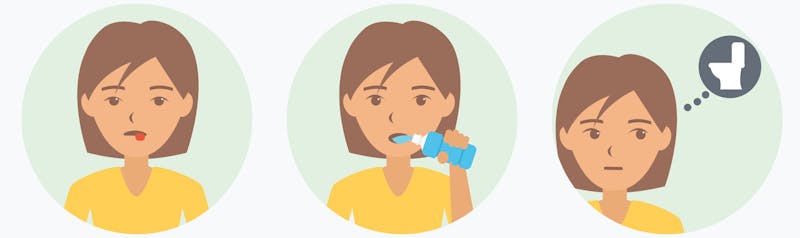
- Dry mouth and increased thirst. Unless you drink enough water and get enough electrolytes like sodium, you may feel a dry mouth. Try a cup of bouillon or two daily, plus as much water as you need. You may also feel a metallic taste in your mouth.
- Increased urination. A ketone body, acetoacetate, may end up in the urine. This makes it possible to test for ketosis using urine strips. It also – at least when starting out – can result in having to go to the bathroom more often. This may be the main cause of the increased thirst (above).
- Keto breath. This is due to a ketone body called acetone escaping via our breath.
It can make a person’s breath smell “fruity,” or similar to nail polish remover. This smell can sometimes also come from sweat, when working out. It’s often temporary. Learn more
Other, less specific but more positive signs include:
- Reduced hunger. Many people experience a marked reduction in hunger on a keto diet.
In fact, many people feel great when they eat just once or twice a day, and may automatically end up doing a form of intermittent fasting. This saves time and money, while also speeding up weight loss.
- Possibly increased energy. After a few days of feeling tired (the “keto flu“) many people experience a clear increase in energy levels. This can also be experienced as clear thinking, a lack of “brain fog,” or even a sense of euphoria.
6. Practical keto diet guides
A keto diet is simple, but it helps to learn some basic new skills. How do you prepare easy keto breakfasts? Have you shunned fat for years and don’t know how to get more in your diet? How do you eat out and still stay on plan?
These tips and guides answer common keto questions.
 Breakfast
How should you start your day? If you love bacon and eggs, dig in! If you don’t, some awesome keto breakfasts have no eggs at all.
Have you been told that “breakfast is the most important meal of the day”? That’s likely not true.
If you’re not hungry when you wake up, feel free to skip breakfast or just have a cup of coffee. Reduced hunger is common on a keto diet, so don’t worry about skipping any meal.
If you’re hungry when you wake up but are short on time, many keto breakfasts are tasty, filling and fast.
7. Potential side effects of a keto diet
When you suddenly switch your body’s metabolism from burning carbs (glucose) to fat and ketones, you may have some side effects as your body gets used to its new fuel, especially during days two through five.
Symptoms may include headache, tiredness, muscle fatigue, cramping, and heart palpitations. These side effects are short-term for most people, and there are ways to minimize or cure them (see below).
To reduce potential side effects, you may decide to gradually decrease your consumption of carbs over a few weeks. But with a slower start you’ll likely not see results as quickly. While the short-term results may differ, the long-term results should remain the same.
We recommend you stop sugar and starches all at once. You will likely lose a number of pounds within days. While much of the initial rapid weight loss is water weight (from reduced swelling), it’s still a highly motivating way to start your keto journey.
Keto flu
Most people who start a ketogenic diet will experience some symptoms of the “keto flu.” This is what you may feel, more or less, a few days after you’ve started a keto diet:
- Headache
- Fatigue
- Dizziness
- Light nausea
- Difficulty focusing (“brain fog”)
- Lack of motivation
- Irritability
These initial symptoms often disappear within a week or two, as your body adapts to increased fat burning.
The main cause of the keto flu is that carb-rich foods can result in water retention (swelling) in the body.
When you start a low-carb diet much of this excess fluid is lost. You may notice increased urination, and with that some extra salt is lost too.
Before your body adapts, this can result in dehydration and a lack of salt. These appear to be behind most of the symptoms of the keto flu.
You can reduce or even eliminate these symptoms by making sure you get enough water and salt. One simple way to do this is to drink a cup of bouillon or broth, once or twice a day.
Keto diet controversies
Most side effects of a keto diet are minor and temporary. But there are a lot of controversies and myths that scare people.
Have you heard that your brain will cease functioning unless you eat lots of carbs? It’s a myth, based on a lack of understanding of the way the body works in ketosis (switching the fuel supply of the brain to ketones).
Another common misunderstanding is mixing up normal ketosis – resulting from a keto diet – with the dangerous medical emergency ketoacidosis. Don’t worry! They are two very different things. Ketoacidosis does not happen just from eating a keto diet.
8. Keto FAQ and other resources
There are many common questions about keto, and we do our best to answer them all. Feel free to check out our full keto diet FAQ, or choose below:
How much weight will I lose on a keto diet?
Results vary widely. Most people lose 2-4 pounds (1-2 kg) during the first week. This is mainly water weight. After that, it’s common to lose about 1 pound (0.5 kg) of excess weight per week. However, some lose much faster (often younger men), some a bit slower (often women over 40).
You can speed up the process or break a weight loss plateau by following our top tips.
When you approach your normal body weight, the weight loss will slow. Just remember, a “normal” body weight differs from person to person depending on our genetics and environmental exposures and may not fit what we see in the popular media. The weight loss won’t go on forever. As long as you follow the advice to eat when you are hungry, you will eventually stabilize your weight.
How do I track my carb intake?
If you use our keto recipes and keto meal plans you’ll stay under 20 net grams of carbs per day, with no need to count.
Using our keto foods guidelines and visual guides will make it simple to estimate roughly how many carbs you eat in a day.
If you want to count carbs exactly, the most popular way is with apps like MyFitnessPal, Chronometer or others.
What happens after I reach my health and weight goals on a keto diet?
Once you reach your goals you can either keep eating keto (to maintain the effect), or you can try adding a bit more carbs. In the latter case the effect of the keto diet will be slightly weaker, and you may or may not regain some weight.
If you revert to your old habits, you’ll slowly return to the weight and health situation you had before. It’s like exercising – if you stop doing it, you’ll slowly lose the benefits. As you may expect, a keto diet, like exercise, only works when you do it.