
The ketogenic diet has been rising in popularity, and for good reason — it is simple and yields significant results. Whether you want to lose fat, increase energy, enhance brain health, improve your blood sugar levels, or improve your overall health, keto may be the diet you are looking for.
However, before we learn how to start a keto diet, we must develop a deeper understanding of what it is and why it is so effective. Knowing the what and why behind this way of eating plays an integral role in your keto diet success as well as knowing how to get started.
Start Here: Three Steps to Starting a Successful Keto Diet
Now that you know the what and the why behind the ketogenic diet, let’s learn about how you can get started. Although there are many different approaches to keto you can try, most of your results will come from following these steps:
- Eat the right foods.
- Eat the right amount of those foods.
- Prepare for the keto flu.
Step 1: What to Eat and What to Avoid to Follow the Keto Diet
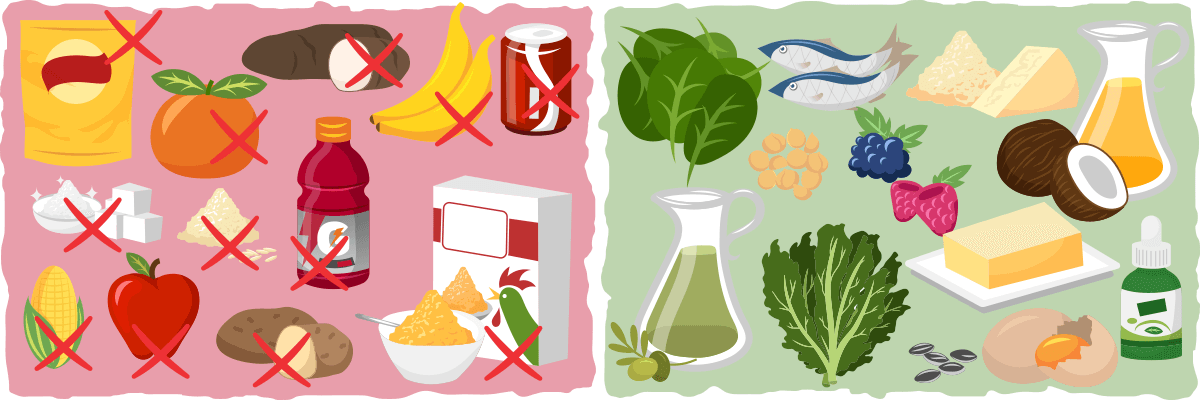
Just by following this step alone, many people are able to lose weight and improve their health significantly. By replacing carb-heavy foods with keto-friendly foods, you will naturally eat fewer calories than before, causing you to lose weight and enhance many aspects of your health.
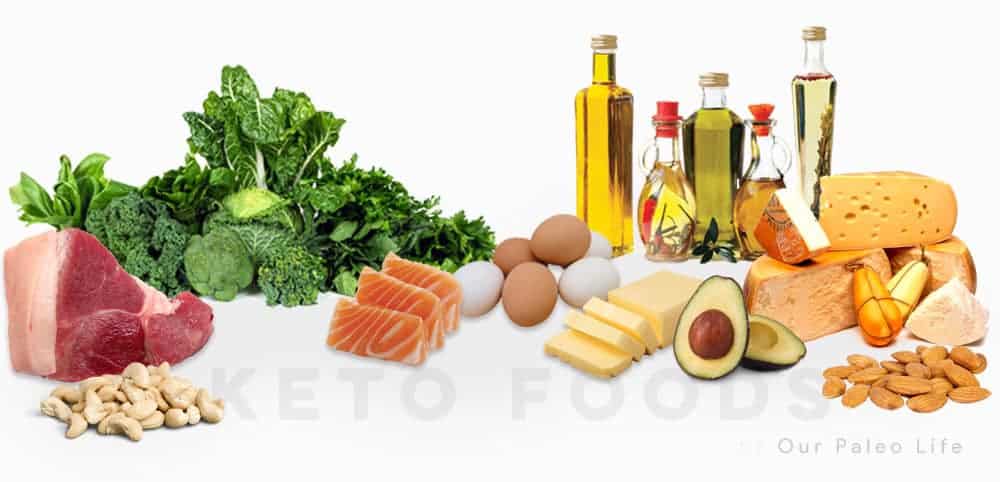
Let’s begin step 1 with a basic keto food list:
Keto Food List
Here is a brief overview of what you should and shouldn’t eat on the keto diet:
Do Not Eat
- Grains – wheat, corn, rice, cereal, etc.
- Sugar – honey, agave, maple syrup, etc.
- Fruit – apples, bananas, oranges, etc.
- Tubers – potato, yams, etc.
Do Eat
- Meats – fish, beef, lamb, poultry, eggs, etc.
- Low-carb vegetables – spinach, kale, broccoli, and other low carb veggies >
- High-fat dairy – hard cheeses, high fat cream, butter, etc.
- Nuts and seeds – macadamias, walnuts, sunflower seeds, etc.
- Avocado and berries – raspberries, blackberries, and other low glycemic impact berries
- Sweeteners – stevia, erythritol, monk fruit, and other low-carb sweeteners >
- Other fats – coconut oil, high-fat salad dressing, saturated fats, etc.
To see more specific advice on what (and what not) to eat.
Keto Meals and Keto Meal Plan Examples
Here is what a sample week of keto meals derived from our keto food list looks like:
Monday
- Breakfast: 1 serving of Bacon Crusted Frittata Muffins
- Lunch: 1 serving of Spinach Watercress Keto Salad
- Dinner: 1 serving of Bacon Cheeseburger Casserole
- Side Dish: 1 serving of Easy Creamy Cauliflower Mashed Potatoes
- Dessert (optional): Eat as many Coconut Peanut Butter Balls as necessary to meet your needs
Total calories: 1,393 (without dessert)
Total cost for the day: $5.61
Tuesday
- Breakfast: 2 servings of Hunger Buster Low Carb Bacon Frittatas
- Lunch: 1 serving of Bacon Cheeseburger Salad
- Dinner: 1 serving of Salmon Patties with Herbs
- Side Dish: 1 serving of Lemon Roasted Spicy Broccoli
- Dessert (optional): Eat as many Coconut Peanut Butter Balls as necessary to meet your needs
Total calories: 1,312 (without dessert)
Total cost for the day: $6.73
Wednesday
- Breakfast: 1 serving of Bacon Crusted Frittata Muffins
- Lunch: 1 serving of Spinach Watercress Keto Salad
- Dinner: 1 serving of Bacon Cheeseburger Casserole
- Side Dish: 1 serving of Easy Creamy Cauliflower Mashed Potatoes
- Dessert (optional): Eat as many Coconut Peanut Butter Balls as necessary to meet your needs
Total calories: 1,393 (without dessert)
Total cost for the day: $5.61
Thursday
- Breakfast: 1 serving of Hunger Buster Low Carb Bacon Frittatas
- Lunch: 1 serving of Bacon Cheeseburger Salad
- Dinner: 1 serving of Salmon Patties with Herbs
- Side Dish: 1 serving of Lemon Roasted Spicy Broccoli
- Dessert: 1 Churro Mug Cake
Total calories: 1,510 (with dessert)
Total cost for the day: $7.37
Friday
- Breakfast: 1 serving of Bacon Crusted Frittata Muffins
- Lunch: 1 serving of Spinach Watercress Keto Salad
- Dinner: 1 serving of Bacon Cheeseburger Casserole
- Side Dish: 1 serving of Easy Creamy Cauliflower Mashed Potatoes
- Dessert (optional): Eat as many Coconut Peanut Butter Balls as necessary to meet your needs
Total calories: 1,393 (without dessert)
Total cost for the day: $5.61
Saturday
- Breakfast: 2 servings of Hunger Buster Low Carb Bacon Frittatas
- Lunch: 1 serving of Bacon Cheeseburger Salad
- Dinner: 1 serving of Salmon Patties with Herbs
- Side Dish: 1 serving of Lemon Roasted Spicy Broccoli
- Dessert (optional): Eat as many Coconut Peanut Butter Balls as necessary to meet your needs
Total calories: 1,312 (without dessert)
Total cost for the day: $6.73
Sunday
- Breakfast: 1 serving of Bacon Crusted Frittata Muffins
- Lunch: 1 serving of Spinach Watercress Keto Salad
- Dinner: 1 serving of Bacon Cheeseburger Casserole
- Side Dish: 1 serving of Lemon Roasted Spicy Broccoli
- Dessert (optional): Eat as many Coconut Peanut Butter Balls as necessary to meet your needs
Total calories: 1,287 (without dessert)
Total cost for the day: $5.29
If you’d like to see the full meal plan along with its corresponding shopping list and budget breakdown.
You can also create your own keto meal plan by browsing through our keto recipe page.
Or if you’d rather have most of the work done for you, check out our Keto Academy to get comprehensive meal plans, shopping lists, and expert guidance.
Troubleshooting for Step 1: Hidden Carbs and Keto-Friendly Replacements
When you start restricting carbs, you’ll notice that so many of your favorite foods come with added sugars and carbs. These foods can quickly kick you out of ketosis and turn your keto diet into a lackluster low carb diet.
To ensure that you are keeping your carbs as low as possible, use these strategies:
- Read labels carefully. Anything that comes in a package (this includes any calorie-containing beverages and common medications like cough medicine) may be filled with hidden carbs. Make sure the ingredients label doesn’t have any ingredients like maltodextrin, dextrose, sugar, cane syrup, starch, etc. because these ingredients can increase blood sugar levels and impair ketone production.
- Use keto friendly sweeteners and flours. Sugar and flour are hard to eliminate for the diet completely, but it is possible if you know what to replace them with. For more info on keto-friendly sweeteners that you can use, check out our guide to sweeteners. And if you are looking for keto-friendly baking ingredients, read through our guide to keto flours.
- Eat keto versions of your favorite carb-rich foods. Just because you are eating keto foods doesn’t mean you have to cut out pizza, pasta, desserts, and sweets. All you have to do is make sure they are keto-friendly. Check out these recipe round-ups for some delicious keto-friendly versions of foods that are usually loaded with carbs:
- The 15 Best Keto Pasta Recipes
- The Best 5 Keto Cheesecake Recipes
- The Best 5 Keto Pancake Recipes
- The 10 Best Keto Ice Cream Recipes
- The Best 10 Keto Bread Recipes
- The 10 Best Keto Pizza Recipes
Key Takeaway For Step 1 of Starting Keto
By following step 1 of starting a keto diet (i.e., exclusively eating keto-friendly foods), you will be able to experience many of the benefits of keto dieting — even if you don’t track your calories or net carbs. However, to increase your chances of getting the results you want, it is best to follow step 2 as well.
Your calorie consumption (i.e., how much you eat) is the most important variable to be aware of when you are trying to lose or gain weight. If eating keto foods (i.e., following step 1) isn’t getting you closer to the results you want, you may need to track how much you eat more precisely.
To illustrate the importance of calories, here are some principles behind dieting that have held true after a tremendous amount of scrutiny:
- When we eat fewer calories than we use throughout the day (i.e., we are in a calorie deficit), we lose weight.
- When we eat more calories than we use throughout the day (i.e., we are in a calorie surplus), we gain weight.
And the two previous statements hold true regardless of the fat and carb content of your diet (when calorie consumption is equal).
If we follow the data further, we find that:
- Severely restricting calories (i.e., extended fasts and very low calorie diets) will cause dramatic weight loss that increases the likelihood of hormonal issues and weight regain in the future.
- Being in an excessive calorie surplus will cause an increase in fat mass and health issues like heart disease and type 2 diabetes.
Altogether, we can conclude that — if you want to gain or lose weight in the healthiest way possible — slow and steady wins the race. In fact, research indicates that losing weight at a rate of 1 to 2 pounds per week is best.
How to Figure Out How Much You Should Eat on the Keto Diet
There are two main methods you can use to figure out how much to eat on keto for optimal results (and they both require some experimentation):
- Check your results and adjust food intake from there. This method requires you to measure your results every 3-5 weeks and change how much fat you eat based on what you find. Losing weight too fast and feeling fatigued all the time? Eat a bit more fat with your meals or add a keto snack to your day. Barely losing any weight? Reduce the fat content of your meals. After making the appropriate adjustments to your keto diet, check your results after another 3-5 weeks to see if you are reaching your goals at a healthy pace. For more in-depth info on how to use this method, read through the “How to Find Out How Much Fat You Need to Eat on Keto” section of this article.
- Use our keto calculator and track your calorie consumption. If you’d rather be more precise with your food intake, I recommend using our keto calculator to establish a starting point for your calorie, fat, carb, and protein consumption. Once you know how much you need to eat, try using a calorie tracking app like MyFitnessPal or Cronometer. Both the calculator and the tracking app will help you figure out exactly how much you need to eat every day to reach your goals. Here is a link to our keto calculator and our guide to tracking calories on keto to help you get started.
Fat, Protein, and Carb Intake: How Much of Each Macronutrient Should You Eat?
Although calorie consumption is one of the most critical variables that determine whether you lose or gain weight, you must also take note of how much fat and protein you eat if you want to decrease your body fat % and maintain (or build) as much muscle mass as possible.
Let’s take a quick look at the importance of each macronutrient and how to find your ideal intake for each one:
- Carbohydrates. Without restricting carb consumption, you cannot enter ketosis. For most people, we recommend eating below 35 grams of carbs a day. Don’t worry, carbs are technically not essential, so most of us can get away with limiting them as much as we want. If you want to find out how to personalize your keto carb limit based on your goals, check out this article.
- Fat. On the keto diet, fat will be your primary calorie source, so it is essential that you eat enough to get the results you want. To help you figure out your ideal fat intake, use our keto calculator. For more specific info on how to adjust your fat intake based on your results, check out our guide to fat consumption on keto.
- Protein. Protein is an essential part of every diet. Without eating enough, you will increase your likelihood of losing muscle mass, and your overall health and well-being will suffer. On the other hand, eating too much protein can decrease ketone production. This is why it is essential to eat the right amount of protein while you are keto dieting — not too much, not too little. The simplest way to find your ideal protein intake is by using our keto calculator.
Key Takeaways for Step 2 of Starting the Keto Diet
The most effective way to lose (or gain) weight is by eating the right amount of calories. Since fat will be your main source of calories while you are on the keto diet, you will need to adjust your fat consumption based on the results you are currently getting and the results you want to get.
The fundamental principles you can use to help you figure out how much you should eat are as follows:
- Eating fewer calories than you need to maintain weight will lead to weight loss.
- Eating more calories than you need to maintain weight will cause weight gain.
- It is healthiest to lose weight at 1 to 2 pounds per week.
While you are on keto, it is important to eat the right amount of each macronutrient as well.
Follow these three keto principles to help you with this:
- Keeping carbs lower than 35 grams per day will help you stay in ketosis.
- By manipulating your daily fat intake (your main calorie source), you can increase/decrease weight loss or increase/decrease weight gain.
- Eating the right amount of protein will help you preserve muscle mass as you lose weight.
To help you find out how much you need to eat of each macronutrient, I recommend using these two tools:
- Our keto calculator
- A calorie tracking app (use our guide to tracking calories on keto to help you with this.)
By following steps 1 and 2, you will vastly increase your chances of getting the results you want. However, you will only see progress if you stick to the diet, which may be more difficult than you think. Even the most strong-willed of us may give up if we don’t take notice of step 3: preparing for the worst.
Step 3: Preparing for the Worst — The Keto Flu and How to Remedy It
If you have never tried the keto diet before, you are probably a carb-burning machine. By following keto, you will be robbing your body of its primary fuel source — and this abrupt dietary shift will cause many changes throughout your body.
As a result of these changes, you may experience something called the “keto flu”. Keto flu is basically an umbrella term for the flu-like symptoms that may occur as your body adapts to a significant decrease in carb consumption.
Fortunately, you can make it through this flu — especially now that you are going to be prepared for it.
If, during the first few days of keto dieting, you experience fatigue, mental fogginess, and/or other keto flu symptoms, try using these three strategies to help remedy them right away:
- Drink more water
- increase your sodium, potassium, and magnesium intake
- Eat more fat (especially MCTs)
For more specific info on the keto flu, its symptoms, and how to remedy it, check out this article.