
Not sure what to eat on a ketogenic diet? Here’s a quick food list for you to reference.
Below you’ll find a brief overview of what you can eat. Scroll further down to see more details on each section.
Being on a diet isn’t the easiest thing in the world, especially when you don’t know what you should eat. We’ve put together this ketogenic diet food list to help people out there make decisions on what they are eating and shopping for.
Below you can find a quick visual guide to what to eat on a ketogenic diet. Let’s go over some of the commonly identifiable items that people use on keto:
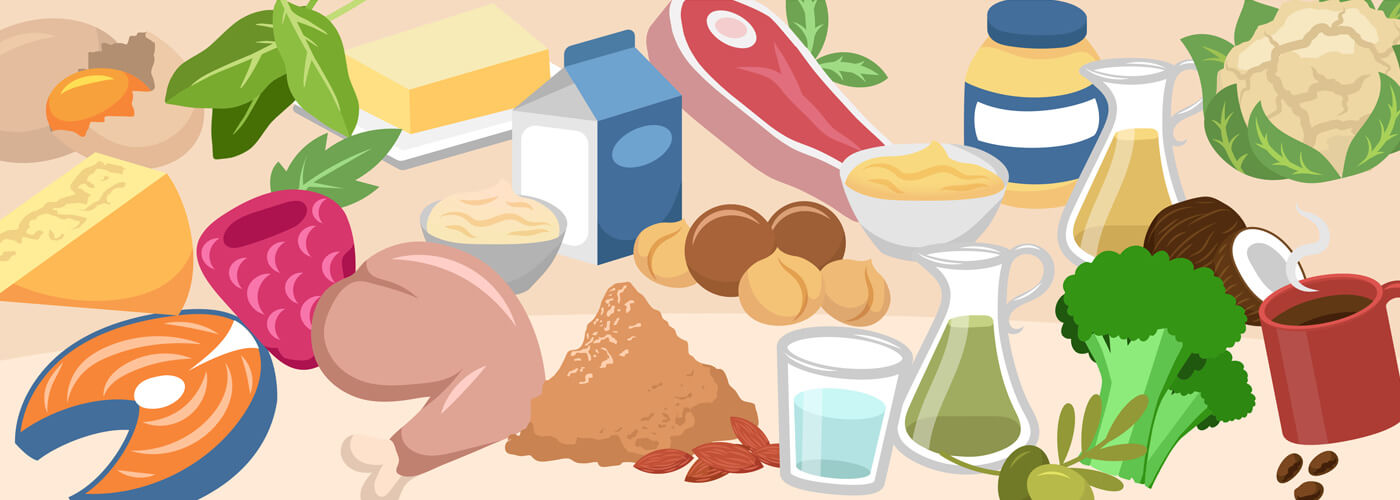
All of the food above sticks to the strict 5% carbohydrate allowance that we use on keto. In general, you can eat from the following food groups:
- Fats & Oils. Try to get your fat from natural sources like meat and nuts. Supplement with saturated and monounsaturated fats like coconut oil, butter, and olive oil.
- Protein. Try to stick with organic, pasture-raised and grass-fed meat where possible. Most meats don’t have added sugar in them, so they can be consumed in moderate quantity. Remember that too much protein on a ketogenic diet is not a good thing.
- Vegetables. Fresh or frozen doesn’t matter. Stick with above ground vegetables, leaning toward leafy/green items.
- Dairy. Most dairy is fine, but make sure to buy full-fat dairy items. Harder cheeses typically have fewer carbs.
- Nuts and Seeds. In moderation, nuts and seeds can be used to create some fantastic textures. Try to use fattier nuts like macadamias and almonds.
- Beverages. Stay simple and stick to mostly water. You can flavor it if needed with stevia-based flavorings or lemon/lime juice.
Fats and Oils
Fats will be the majority of your daily calorie intake when you are on a ketogenic diet, so choices should be made with your likes and dislikes in mind. They can be combined in many different ways to add to your meals – sauces, dressings, or just simply topping off a piece of meat with butter.
Fats are vital to our bodies, but they can also be dangerous if you are consuming too much of the wrong types of fats. There are a few different types of fat that are involved in a ketogenic diet. Different foods usually have various combinations of fats, but the unhealthy fats are easy to avoid. Here’s a brief overview:
- Saturated Fats. Eat these. Some examples of these are butter, ghee, coconut oil, and lard.
- Monounsaturated Fats. Eat these. Some examples of these are olive, avocado, and macadamia nut oils.
- Polyunsaturated Fats. Know the difference. Naturally occurring polyunsaturated fats in animal protein and fatty fish are great for you, and you should eat these. Processed polyunsaturated fats in “heart healthy” margarine spreads are bad for you.
- Trans Fats. Completely avoid. These are processed fats that are chemically altered (hydrogenated) to improve shelf life. Avoid all hydrogenated fats, such as margarine, as they’re linked to heart disease.
Saturated and monounsaturated fats such as butter, macadamia nuts, avocado, egg yolks, and coconut oil are more chemically stable and less inflammatory to most people, so they are preferred. Below, you can see some common ways to increase the amounts of fat you eat on a ketogenic diet.
You also want to have a balance between your omega 3’s and omega 6’s, so eating things like wild salmon, tuna, trout, and shellfish can help provide a balanced diet of Omega-3’s. If you don’t like fish, or just prefer not to eat it, we suggest taking a small fish oil supplement. You can also take krill oil for omega 3’s if you are allergic.
Keep an eye on your intake for nut or seed based foods, as they can be quite high in inflammatory omega 6’s. These include items like almonds, walnuts, pine nuts, sunflower oil and corn oil. Eating fatty fish and animal meat, keeping snacking to a minimum, and not over-indulging in dessert items that are dense in almond flour is usually enough to keep your omega’s at normal ranges.
Essential fatty acids (the omegas) provide core functions to the human body, but they are often times out of balance when on a standard diet. On keto, with a little bit of preparation, your omega fatty acids are easily manageable. If you want to know more about essential fatty acids, omegas, and how they interact with our body on a ketogenic diet.
Some ketogenic diet foods that are ideal for fats and oils (organic and grass-fed sources are preferred):
- Fatty Fish
- Animal Fat (non-hydrogenated)
- Lard
- Tallow
- Avocados
- Egg Yolks
- Macadamia/Brazil Nuts
- Butter/Ghee
- Mayonnaise
- Coconut Butter
- Cocoa Butter
- Olive Oil
- Coconut Oil
- Avocado Oil
- Macadamia Oil
- MCT Oil
If you’re using vegetable oils (olive, soybean, flax, or safflower) choose the “cold pressed” options if they are available.
If you tend to fry things up, try to go after non-hydrogenated lards, beef tallow, ghee, or coconut oil since they have higher smoke points than other oils. This allows less oxidization of the oils, which means you get more of the essential fatty acids.
Cravings and Sugar Addiction
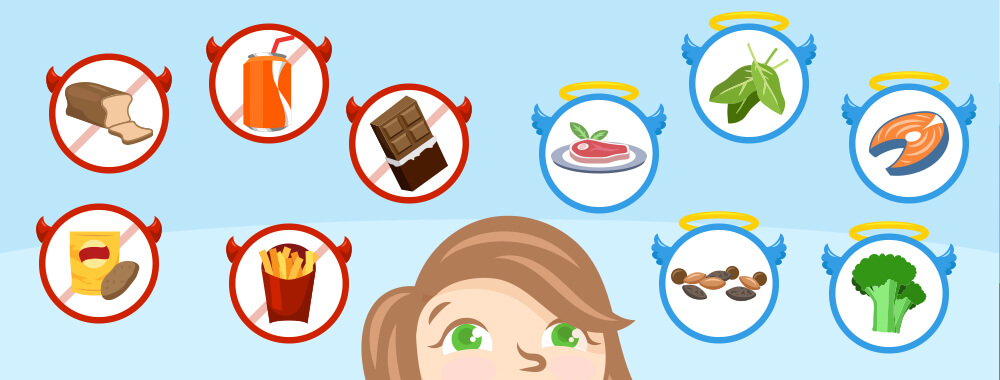
Most of the cravings that we get are caused by sugar. Sugar, at the end of the day, is an industry that’s run on addiction. There have been numerous studies showing that sugar stimulates the reward centers of the brain.
When we constantly consume sugar, we release dopamine in our brain – creating an addiction and an increased tolerance. Over time you will have to eat larger and larger amounts of sugar to continue the dopamine secretion. Once our body is dependent on a chemical reaction in the brain, we can find that we’re craving things even when we’re not hungry.
When trying to shift from a high carb diet to a ketogenic diet, cravings can definitely get strong. It’s always best to try to clean house before you start so that you don’t have food around you that can lead to cravings. We recommend that when switching to keto, you restrict using sweeteners completely for the first 30 days. It normally leads to breaking sugar addiction and ultimately not having cravings.
Besides sugar, sometimes our bodies crave food because of lack of nutrients. The craving usually goes away if you fulfill your nutrient intake in a different way. Below you’ll see a few ways to get rid of pesky cravings that hit.
Hidden Carbs and Nutrition Labels
Going on a ketogenic diet can be very difficult in the very beginning. Knowing what to eat and what not to eat takes some time to get used to, so if you make some mistakes in the beginning don’t be too hard on yourself. It’s better to make a mistake and learn from it than to make a mistake and not realize it was in error.
There’s always going to be foods that are bad for us when it comes to eating. Some foods are particularly sneaky at hiding carbohydrates from us. Here’s a small list of common items that sometimes have hidden carbs:
- Low-carb products. There’s a lot of choices when it comes to bars, snacks, and foods. It’s better to stay away from these, but if you have no choice make sure to read the label. Many use high glycemic index sweeteners in their products.
- Spices. As mentioned above, spices do have carbs – but certain ones have more carbs than others. These include onion powder, cinnamon, garlic powder, allspice, and ginger. Always read labels and make sure no added sugar are in your spice blends.
- Fruit and berries. Most fruits are not allowed to be consumed due to the high sugar content. Many people still eat berries, but you have to control your portioning with these. Be careful blueberries and cranberries as they add up in carbohydrates fast.
- Tomato-based products. Lots of people use tomato sauces and canned diced tomatoes. Make sure to read the nutrition labels – food companies are infamous for messing with serving sizes to make their foods seem “healthier.” Make sure that there are no added sugars.
- Condiments. It’s almost tradition to add sauce to a meal – but be careful about your favorites. Sometimes condiments and sauces can show minuscule serving sizes which skew the actual carbs that are inside. Make sure you read the nutrition and ingredient lists well.
- Peppers and chiles. Be very careful when you use small peppers as sometimes they can be incredibly sweet inside. There can sometimes be 3-4g carbs in a tiny chili pepper. When using bell peppers, try to opt for green as red/yellow bell peppers will have slightly more carbs.
- Diet soda. You can drink diet soda, but it’s recommended to cut it out completely. Some people report being knocked out of ketosis after a large consumption of artificial sweeteners. Studies also show a link between sugar cravings and artificial sweeteners – cutting the soda out will help curb your cravings.
- Chocolate. You can eat chocolate on keto, but you have to be very cautious with the serving sizes. You want to stick to very dark chocolate (90% or higher), as this will have much fewer carbs.
- Medicine. Cold medications, cough syrups, and flu remedies often contain lots of sugar. Some of the generic over the counter cough medicines contain 20g of carbs per serving, so be very careful when sick. There are usually sugar-free or diabetic alternatives.
There are so many food items out there that contain hidden sugars and carbs. Always be careful about what you’re purchasing and try to make as much from scratch as you can from home.
Foods to Avoid
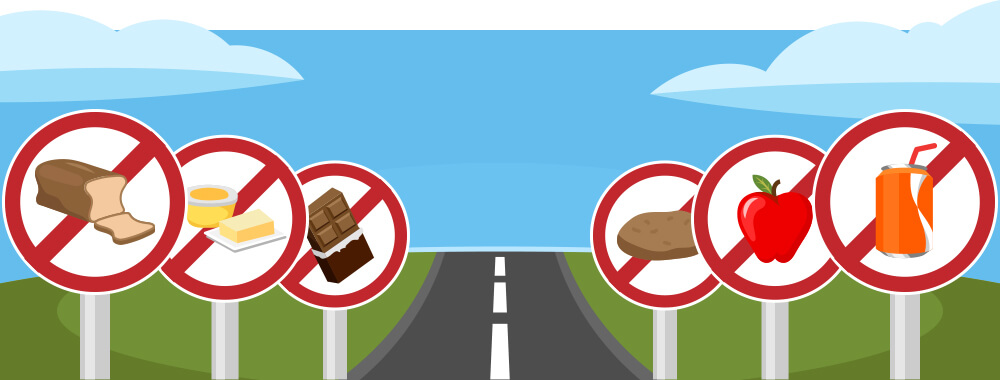
By now, you should have a pretty good idea of what to eat on a ketogenic diet. Make sure that you read and re-read through the list of acceptable foods to build a mental image around what type of meals you will want to eat.
If you’re still unsure about any products or food items that might not be keto friendly, don’t worry too much. Below, you’ll find a list of things that you should always be on the look out for.
- Sugar. It’s typically found in soda, juice, sports drinks, candy, chocolate, and ice cream. Anything that’s processed and sweet you can think of most likely contains sugar. Avoid sugar at all costs.
- Grains. Any wheat products (bread or buns), pasta, cereal, cakes, pastries, rice, corn, and beer should be avoided. This includes whole grains like wheat, rye, barley, buckwheat, and quinoa.
- Starch. Avoid vegetables (like potatoes and yams) and other things like oats, muesli, etc. Some root vegetables are okay in moderation – be sure to read the section on vegetables.
- Trans Fats. Margarine or any other spreadable replacement butter should be avoided as they contain hydrogenated fats (bad for us).
- Fruit. Avoid any large fruits (apples, oranges, bananas) as they’re extremely high in sugar. Some berries can be consumed in moderation – be sure to read the section on fruits.
- Low-fat foods. These tend to be much higher in carbs and sugar than full-fat versions. Make sure you read the package to make sure a mistake isn’t made.
In general, the more “real” the food, the better it is for you. While some processed foods are acceptable, many are not. Make sure that you read through the ingredients and nutrition information to make sure that it can fit within your diet.