

Understanding how ketosis works is an important part when starting a keto diet. Ketosis is a process that the body goes through on an everyday basis, regardless of the number of carbs you eat. This is because this process provides us with energy from ketones whenever sugar is not readily available.
In fact, you may have already experienced a very mild level of ketosis if you ever skipped a meal or two, didn’t eat many carbs during the day or exercised for longer than an hour. By doing one of these three things, you can initiate the process of ketosis.
Whenever the need for energy increases and carbohydrates aren’t available to meet that demand, the body starts increasing its ketone levels. If carbs are restricted for a more significant amount of time (i.e., longer than three days), then the body will increase ketone levels even further. These deeper levels of ketosis confer many positive effects throughout the body — effects that are experienced in the safest and healthiest way possible by following the ketogenic diet.
However, most people are rarely in ketosis and never experience its benefits because the body prefers to use sugar as its primary fuel source — especially if plenty of carbs and protein are provided by the diet.
What Happens When We Aren’t in Ketosis
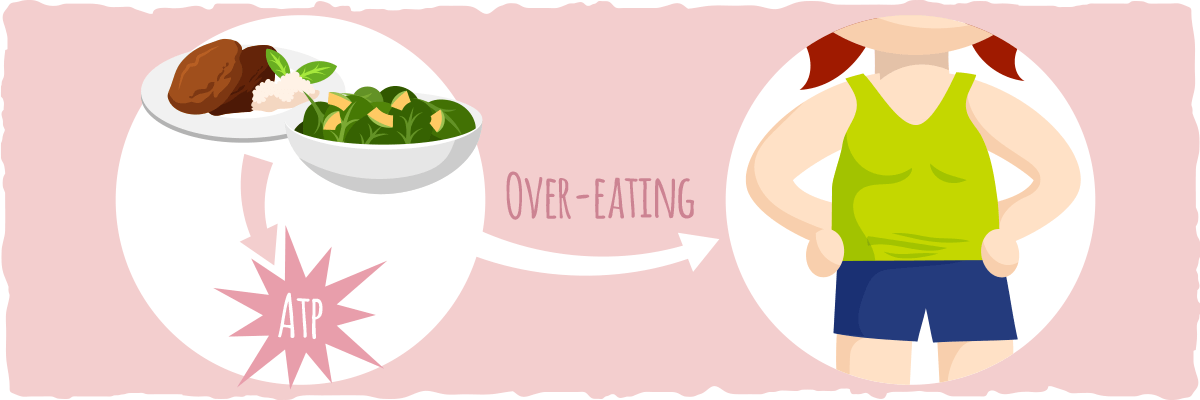
Your body adapts to what is put in it, processing different types of nutrients into the energy that it needs. Proteins, fats, and carbs can all be converted into fuel using various metabolic processes.
When you eat high-carbohydrate foods or excessive amounts of protein, your body will break it down into a simple sugar called glucose. This happens because glucose provides the cells with the quickest source of ATP, which is the primary energy molecule needed to fuel almost everything that goes on in the body.
In other words, more ATP means more cellular energy and more calories lead to more ATP. In fact, every calorie you consume from carbohydrates, fats, and proteins can be used to increase your ATP levels in some way.
If you’ve ever used our keto calculator to determine your caloric needs, you will see that your body uses up quite a lot of calories. Our bodies use up much of these nutrients just to maintain itself on a daily basis. If you eat more than enough food, however, there will be an excess of glucose that your body doesn’t need. What does your body do with the extra sugar?
Given the fact that most of us are within driving distance of seemingly endless amount of food, our bodies should just excrete it from the body. However, the body isn’t evolved to deal with the abundant food environment we have today.
Instead, it is constantly preparing itself for a future famine. So, rather than excreting excess calories that the body doesn’t need now, it stores them so that the cells will, without a doubt, have energy later.
The body saves up for the future in two ways:
- Glycogenesis. During this process, excess glucose is converted to glycogen (the body’s stored form of sugar) and stored in the liver and muscles. Researchers estimate that the body stores approximately 2000 calories in the form of muscle and liver glycogen. Depending on the person, this means that glycogen levels will be depleted within 6-24 hours when no other calories are consumed. Luckily, we have an alternative method of energy storage that can help sustain us when glycogen levels are low — lipogenesis.
- Lipogenesis. If there’s already enough glycogen in your muscles and liver, any extra glucose will be converted into fats and stored via a process called lipogenesis. In contrast to our limited glycogen stores, our fat stores are virtually unlimited. They provide us with the ability to sustain ourselves for weeks to months without adequate food.
When food carbohydrates or calories are restricted, glycogenesis and lipogenesis are no longer active. Instead, glycogenolysis and lipolysis take their place, freeing energy from glycogen and fat stores.
However, something unexpected happens to you once your body has no more glucose or glycogen? Yes, fat is still used as fuel, but an alternative fuel source called ketones is produced as well. As a result, ketosis happens.
Why Ketosis Happens
When your body has no access to food, like when you are sleeping, fasting, or following the ketogenic diet, the body will convert some of its stored fat to highly efficient energy molecules called ketones. (We can thank our body’s ability to switch metabolic pathways for that.) These ketones are synthesized after the body breakdowns fat into fatty acids and glycerol.
But why does this happen? Why not stick with using fat for fuel?
Although the fatty acids and glycerol can be directly turned into fuel in many cells throughout the body, they are not used as energy by brain cells at all. This is because they are converted into energy too slowly to support the function of the brain.
This is why sugar tends to be the primary source of fuel for the brain. Surprisingly, this also helps us understand why we produce ketones.
Without having an alternative energy source, our brain would be extremely vulnerable when we don’t consume enough calories. Our muscle would be broken down rapidly and converted into glucose to feed our sugar-hungry brains until we didn’t have enough strength left to find food. Without ketones, the human race would most likely be extinct.
How Ketones Are Formed: The Process
Earlier we found out that the body breaks down fat into fatty acids and glycerol, which can be used for fuel in the cells directly but not by the brain. To meet the needs of your brain, the fatty acids and the glycerol enter the liver where they are converted into sugar and ketones.
More specifically, the glycerol undergoes a process called gluconeogenesis, which converts it into sugar, while the fatty acids are converted into ketone bodies during a process called ketogenesis.
As a result of ketogenesis, a ketone body called acetoacetate is produced.
Acetoacetate is then converted into two other types of ketone bodies:
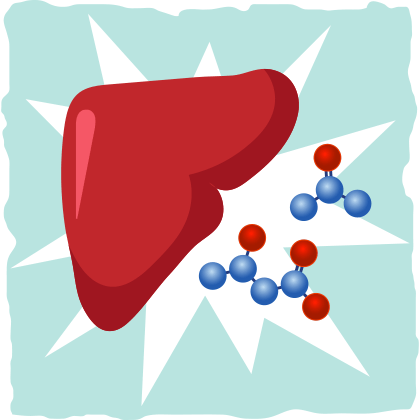
- Beta-hydroxybutyrate (BHB) – After being keto-adapted for a couple of weeks, you will begin to convert the acetoacetate into BHB as it is a much more efficient source of fuel (it undergoes an additional chemical reaction that provides more energy for the cell than acetoacetate). In general, studies show that the body and brain prefer using BHB and acetoacetate for energy because the cells can use it 70% more efficiently than glucose.
- Acetone – Can sometimes be metabolized into glucose, but is mostly excreted as waste. This gives the distinct smelly breath that most ketogenic dieters know.
Over time, your body will expel less excess ketone bodies (acetone), and if you use keto sticks to track your levels of ketosis, you may think it is slowing down.
That’s not the case, as your brain is burning the BHB as fuel, and your body is trying to give your brain as much efficient energy as possible. This is commonly why long-time low carbohydrate consumers will not show deep levels of ketosis on their urine tests.
In fact, long-time keto dieters will derive up to 50% of their basal energy requirements and 70% of their brain’s energy needs from ketones, so don’t let the urine tests fool you. If you are looking for more accurate methods to track ketosis, read through our guide on measuring ketosis.
Ketosis Can’t Fuel The Body By Itself: The Importance of Gluconeogenesis
No matter how keto-adapted you become, many of your cells will still need glucose to survive. To meet the energy needs of the brain and body that cannot be met by ketones, the liver uses a process called gluconeogenesis.
Remeber how we mentioned earlier that glycerol (a component of fat) is converted into glucose via gluconeogenesis? Well, amino acids from proteins and lactate from the muscles can be converted into sugar as well.
By converting amino acids, glycerol, and lactate into sugar, the liver is able to meet the glucose needs of the body and brain during times of fasting and carbohydrate restriction. This is why there is no essential requirement for carbohydrates in the diet. Your liver will, in most cases, make sure you have enough glucose in the bloodstream for your cells to survive.
How You Can Get in the Way of Ketosis
Although gluconeogenesis and ketogenesis work together when carbohydrates are limited, this doesn’t mean that ketones will steadily increase. Certain factors like eating too much protein can get in the way of ketosis and increase the need for gluconeogenesis.
This is due to the fact insulin levels and ketone production are intimately linked, and the protein sources that are commonly consumed on keto raise insulin levels. In response to an increase in insulin levels, ketogenesis is downregulated, which increases the need for gluconeogenesis to produce more sugar.
This is why eating too much protein can impair your ability to get into ketosis. However, this does not mean that you should restrict your protein consumption either. By limiting protein intake, your muscle tissues will be used to make the glucose that your body and brain need for fuel.
The best approach is to use our keto calculator to find out how much protein and fat you should eat every day. By eating in this way, you will not eat so much protein that it keeps you from ketosis or so little protein that you lose precious muscle mass.
Instead, you’ll be eating the ideal amount of protein that your body needs to maintain muscle mass and meet your sugar needs while you are on the path to ketosis.
Understanding How Ketones Work
Most of our knowledge about ketosis comes from studies on people who are fasting from all foods, not from ketogenic dieters. However, we can make many inferences about the ketogenic diet from what the
researchers found in the studies on fasting.
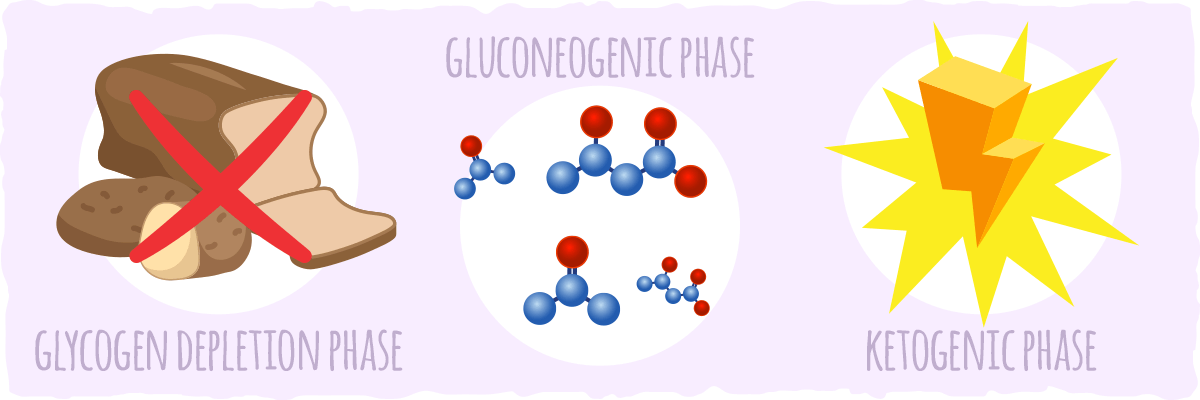
First, let’s look at the stages that the body goes through during fasting:
Stage 1 — The glycogen depletion phase — 6 to 24 hours of fasting
During this phase, most energy is provided by glycogen. At this point, hormone levels are shifting, causing increases in gluconeogenesis and fat burning, but ketone production is not active yet.
Stage 2 — The gluconeogenic phase — 2 to 10 days of fasting
During this phase, glycogen is fully depleted, and gluconeogenesis takes over to provide the body with energy. Ketones are starting to be produced, but at lower levels. You may notice that you have keto breath and are urinating more often because of increased acetone levels in your blood. The window of time for this phase is so broad (two to ten days) because it depends on who is fasting. For example, healthy males and obese individuals tend to stay in the gluconeogenic phase for more extended periods of time than healthy women.
Stage 3 — The ketogenic phase — after 2 days of fasting or more
This phase is characterized by a decrease in protein breakdown for energy and an increase in fat and ketone use. At this point, you will definitely be in ketosis. Each person will enter this stage at different rates depending on genetic and lifestyle factors, their activity levels, and how many times they fasted/restricted carbs before.
There you have it — the three stages that everyone goes through on the path to ketosis. Whether you are fasting from carbohydrates (the ketogenic diet) or fasting from all food, you will go through these stages. However, this doesn’t mean that you’ll get the same benefits from fasting as you do from following the ketogenic diet.
Putting It All Together
When you restrict carbohydrates, your liver uses two processes to fuel your cells — ketogenesis and gluconeogenesis.
Ketogenesis takes fatty acids from stored fat and dietary fat and converts them into ketones. The ketones are then released into the blood to fuel cells like our brain and muscle cells. The process by which the body burns ketones for fuel is called ketosis.
However, This does not mean that every cell in the body can survive on ketones. Some cells always need to use sugar for energy. To meet the energy demands that can’t be met by ketones, your liver uses a process called gluconeogenesis. Gluconeogenesis is like a magic trick that the liver uses to convert non-sugar substrates like glycerol from fatty acids, amino acids from protein, and lactate from muscles into sugar.
Together, ketogenesis and gluconeogenesis create the ketones and sugar that meet all of the body’s energy needs when food isn’t available or when carbohydrates are restricted.
Although ketones are most well-known for being an alternative fuel source, they provide us with many unique benefits as well. The most effective and safest way to get all of the benefits of ketosis is by following the ketogenic diet. By doing so, you won’t run the risk of losing precious muscle mass or entering the potentially lethally state of ketoacidosis.
However, the ketogenic diet is a bit more nuanced than many people think. It’s not only about restricting carbohydrates — ensuring adequate protein, fat, and calorie consumption are essential to your success as well.